Fortunately, substance abuse doesn’t have to be difficult. Detox centers in NJ know that even legal, everyday substances can be misused for hazardous highs.
Inhalants sometimes referred to as solvents, are volatile substances that are classified as depressant drugs. They include a wide variety of easily obtained products that can be misused by inhaling their vapors. Breathing in these fumes produces a high that affects the central nervous system and slows down the workings of the heart and brain, particularly breathing.
Common forms of inhalants include:
- Household and industrial products, such as glue, paint, nail polish remover, and dry-cleaning fluids.
- Aerosol sprays that contain propellants and solvents, such as whipped cream canisters, whipped cream chargers (“whippits”), hair sprays, and compressed air
- Fuels, like gasoline or lighter fluid.
- Gases, such as medical anesthetics and gases used in household or commercial products, such as fire extinguishers and nitrous oxide (laughing gas).
- Poppers, which are small vials of amyl nitrite
Inhalants are cheap and can be commonly found in supermarkets and at home, which makes them easy for people to abuse. Since inhalants give off quick highs that only last several minutes, abusers tend to “huff” them repeatedly so that they can sustain the high.
Solvents force the body to relax by slowing connections in the brain. Poppers, which are considered more of an adult club drug than a household one used by teenagers, relax the muscles and blood vessels while giving off an intense high. Formally known as nitrates, poppers are notorious for enhancing sexual experiences. Nitrous oxide, commonly known as laughing gas, is legally used as an analgesic during surgery, but it’s also a popular inhalant that can be huffed through “whippits,” bags, and balloons.
Are Inhalants Addictive?
Even though inhalant addiction is rare, it certainly exists. Frequent “huffing” can result in mild withdrawal symptoms when stopped, including mood changes, sweating, upset stomach, and sleeping problems. Constant use of inhalants, even with knowledge of their adverse effects, can make for a slow decline into addiction.
A popular example of inhalant abuse in the media can be found in the 2003 film “Thirteen.” The two main characters, troubled seventh-graders Tracy and Evie, are seen huffing an aerosol spray can. Tracy claims she is so high that she can’t feel anything, so she asks Evie to hit her. This spirals into a negative cycle where Evie and Tracy keep hitting and punching each other in the face until they bleed.
Inhalant abuse can also be a gateway to destructive behavior and usage of other highly addictive substances like cocaine and opioids (heroin, oxycodone, codeine, etc.). This downward spiral can also be seen in “Thirteen.”
Even if you don’t become addicted to inhalants after habitual use, it is possible to develop a tolerance to — and to a degree, a dependency on — them. This tolerance can result in mild to severe withdrawal symptoms once you stop using inhalants.
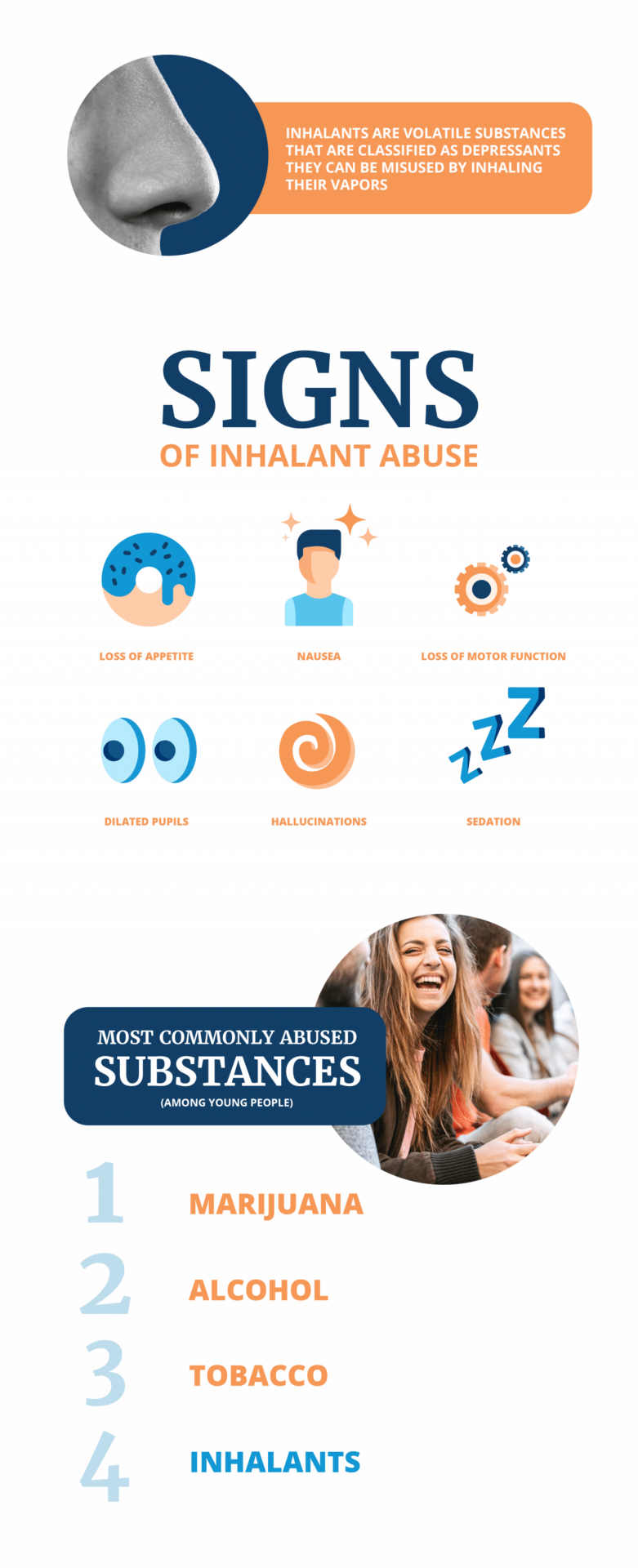
What are the Signs and Symptoms of Inhalant Abuse?
- Mild highs
- Hallucinations
- Sedation
- Vomiting and nausea
- Dilated pupils
- Loss of appetite
- General loss of motor function
- Jerky reactions
- Facial rash where inhalant blistered skin
Inhalants affect the body quickly, so signs and symptoms of use and abuse can usually be seen immediately after use.
What Harm Can Inhalants Do?
- Dementia
- Impaired cognitive functioning
- Central nervous system damage
- Brain damage
Inhalants can do intense harm to the human body since they quickly permeate the blood-brain barrier, which carries blood to spinal cord tissue and the brain. As a result, brain damage is by far the worst effect of inhalant abuse, and symptoms include depression, severe nosebleeds, and a loss of sensation.
People who “huff” these products will inhale them directly from the container or spray them directly into the mouth or nose. This is very dangerous because it can cause suffocation. Skin and mucous membrane damage can also occur from the freezing effects of some inhalants, essentially causing frostbite and a frozen trachea.
Many inhalants cause permanent damage, especially if abused heavily for a long period of time. Inhalant chemicals build up in the body, can irritate the stomach and intestines, and cause damage to the brain, central nervous system, kidneys, and liver. Sensation in the feet and hands can also decrease over time, and pins-and-needles sensations can also be felt throughout the body.
An eventual effect of inhalant abuse can be deadly, and there is no telling when this could happen. Sudden sniffing death, which refers to abrupt death from huffing, happens when the heart stops after inhaling solvents. This could occur even after one use.
Statistics About Inhalant Abuse in the U.S.
In recent years, inhalant abuse has been studied more closely due to its rise in the U.S. According to the Substance Abuse and Mental Health Services Administration, about 1.8 million people ages 12 and older used inhalants to get high in 2015. Of this group, 684,000 were young adults ages 12 to 17. Inhalants are the fourth most commonly abused substance among young people after marijuana, alcohol, and tobacco.
Teen Inhalant Abuse
Inhalant abuse is common among teens since these are usually the first substances they can find, as many of them are household products. They can also legally purchase inhalants at a low price, and they give off a quick high. Unlike marijuana and cocaine, inhalants can’t be easily detected on drug tests, either.
Inhalants can be easily breathed in without using heat or smoke to vaporize them. If you find that your teen is abusing inhalants, there are some steps you can take before it gets worse. Make sure to keep sprays and solvents far from your children. If you catch your child huffing and they’re still breathing, move them to a ventilated area. You must call 911 if their breathing stops.
Treatment of Inhalant Abuse
Inhalants affect the body quickly, so If someone you know is abusing them, you should get help right away. Inhalant abuse treatment is readily available for those who need it. To prevent permanent side effects, you must stop the abuser from using inhalants immediately. Symptoms like irritability and depression will noticeably disappear once treatment begins, which will make therapy for inhalant abuse begin sooner.
Young Adult Rehab for Inhalant Abuse
After you get immediate help for your teen who is abusing inhalants, you should get them to a safe place with plenty of oxygen, away from harmful substances. The next step is to take them to our young adult rehab program for inhalant abuse.
Inpatient Treatment for Inhalants
Inpatient rehab for inhalant abuse will usually last longer than that of a typical program because inhalants stay inside body fat. As a result, it can take several weeks for its effects to disappear. For this reason, a patient may have to detox for 30 days before beginning any kind of therapy.
Since addiction to inhalants tends to cause the individual to have limited thinking ability and a short attention span, therapy sessions will last about 15 to 30 minutes at first. As treatment progresses, sessions can become longer. The individual’s mental state will be reassessed regularly.
Outpatient Treatment for Inhalants
For patients who don’t have a severe addiction to inhalants, outpatient rehab may be the best choice. Outpatient treatment for inhalant abuse is built around clients who have outside responsibilities, such as work or school.
As with inpatient treatment, outpatient treatment for inhalant abuse will most likely start with a 30-day detox. This will cleanse the body of the harm that inhalants have done. Usually, this begins with getting patients in a stable enough place to start therapy.
Therapy for Inhalant Abuse
Once a patient is stabilized after abusing inhalants for so long, they will still need therapy to complete their course of treatment. Therapy will help patients understand how inhalant abuse got them to a low point in their lives, and it will show them how to navigate life after huffing.
Individual Therapy for Inhalant Abuse
Individual therapy is the first course of aftercare for people suffering from inhalant abuse. Once they have been weaned off these products, they can begin the steps needed to heal from this problem. During individual therapy sessions, you and your counselor will discuss how your inhalant abuse has negatively affected you and your loved ones. From these sessions, you’ll gain the skills needed to move on to a better life without drugs.
Family Therapy for Inhalant Abuse
Family therapy is an essential component of inhalant rehab, as it can help your loved ones understand your abuse and take steps to figure out what led to it. Since inhalant abuse is prevalent among teens, family therapy works for parents who still have children at home.
Can Discovery Institute Help with Inhalant Abuse?
If someone you know has been abusing inhalants, there is help from the Discovery Institute. Starting with a medically supervised detox, our rehabilitation centers help patients get back to living a healthy life free of drugs. Contact Discovery Institute today for assistance with substance abuse treatment, that you or a loved one needs.